
英语原文共 17 页,剩余内容已隐藏,支付完成后下载完整资料
英文文献翻译
题 目 去除工业废水中重金属的研究
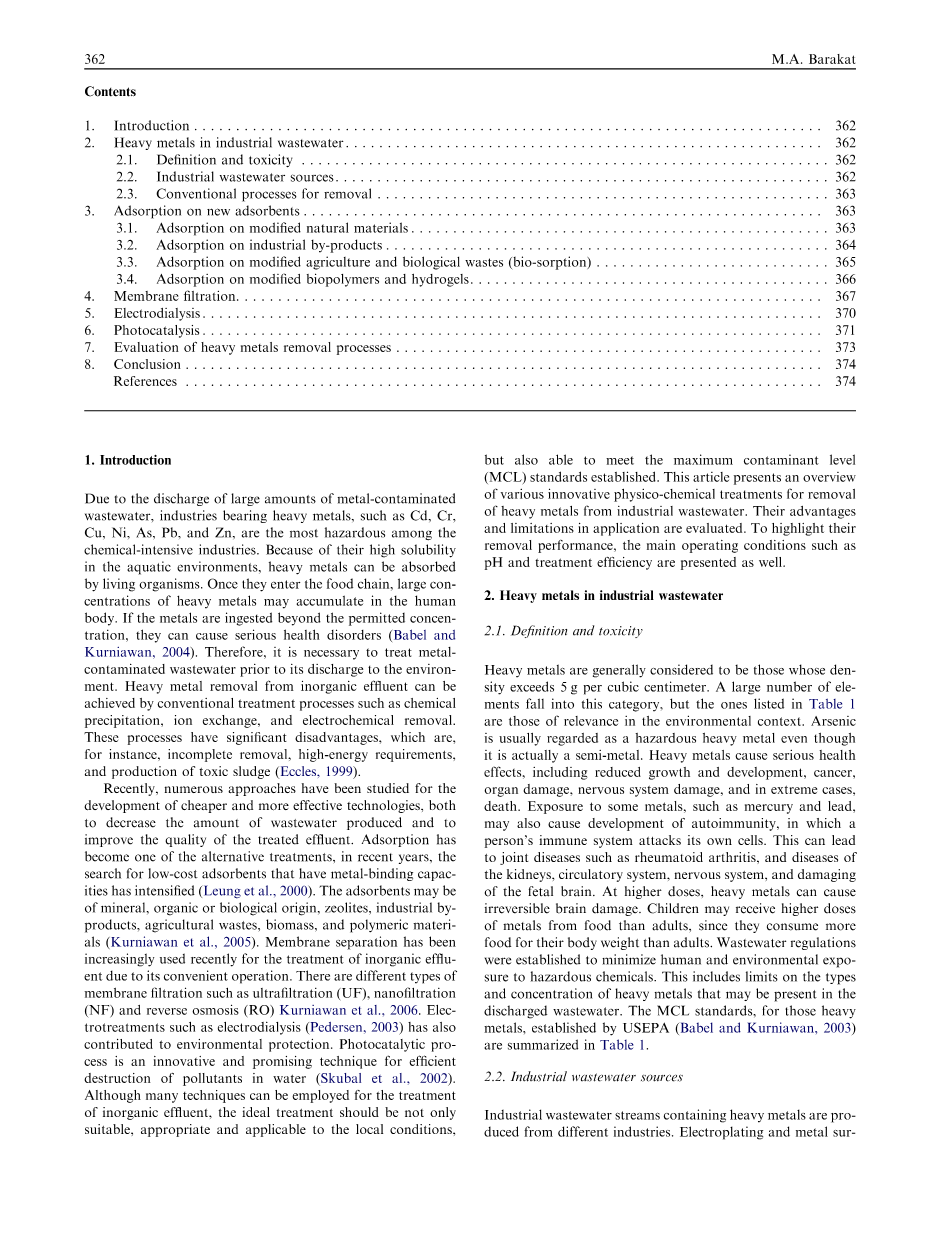
目 录
- 前言hellip;hellip;hellip;hellip;hellip;hellip;hellip;hellip;hellip;hellip;hellip;hellip;hellip;hellip;hellip;hellip;hellip;hellip;hellip;hellip;hellip;hellip;hellip;hellip;hellip;hellip;3
-
工业废水中重金属hellip;hellip;hellip;hellip;hellip;hellip;hellip;hellip;hellip;hellip;hellip;hellip;hellip;hellip;hellip;hellip;hellip;hellip;hellip;hellip;3
- 定义与危害hellip;hellip;hellip;hellip;hellip;hellip;hellip;hellip;hellip;hellip;hellip;hellip;hellip;hellip;hellip;hellip;hellip;hellip;hellip;hellip;hellip;hellip;hellip;hellip;hellip;hellip;hellip;hellip;hellip;hellip;3
- 工业废水的来源hellip;hellip;hellip;hellip;hellip;hellip;hellip;hellip;hellip;hellip;hellip;hellip;hellip;hellip;hellip;hellip;hellip;hellip;hellip;hellip;hellip;hellip;hellip;hellip;hellip;hellip;hellip;hellip;4
- 传统的处理方法hellip;hellip;hellip;hellip;hellip;hellip;hellip;hellip;hellip;hellip;hellip;hellip;hellip;hellip;hellip;hellip;hellip;hellip;hellip;hellip;hellip;hellip;hellip;hellip;hellip;hellip;hellip;hellip;4
-
新型吸附剂hellip;hellip;hellip;hellip;hellip;hellip;hellip;hellip;hellip;hellip;hellip;hellip;hellip;hellip;hellip;hellip;hellip;hellip;hellip;hellip;hellip;hellip;hellip;5
- 改性的天然材料hellip;hellip;hellip;hellip;hellip;hellip;hellip;hellip;hellip;hellip;hellip;hellip;hellip;hellip;hellip;hellip;hellip;hellip;hellip;hellip;hellip;hellip;hellip;hellip;hellip;hellip;hellip;hellip;5
- 工业副产品hellip;hellip;hellip;hellip;hellip;hellip;hellip;hellip;hellip;hellip;hellip;hellip;hellip;hellip;hellip;hellip;hellip;hellip;hellip;hellip;hellip;hellip;hellip;hellip;hellip;hellip;hellip;hellip;hellip;hellip;6
- 改性的生物吸附剂hellip;hellip;hellip;hellip;hellip;hellip;hellip;hellip;hellip;hellip;hellip;hellip;hellip;hellip;hellip;hellip;hellip;hellip;hellip;hellip;hellip;hellip;hellip;hellip;hellip;hellip;hellip;7
- 改性生物聚合物和水凝胶hellip;hellip;hellip;hellip;hellip;hellip;hellip;hellip;hellip;hellip;hellip;hellip;hellip;hellip;hellip;hellip;hellip;hellip;hellip;hellip;hellip;hellip;hellip;hellip;8
- 膜过滤hellip;hellip;hellip;hellip;hellip;hellip;hellip;hellip;hellip;hellip;hellip;hellip;hellip;hellip;hellip;hellip;hellip;hellip;hellip;hellip;hellip;hellip;hellip;hellip;10
- 电渗析hellip;hellip;hellip;hellip;hellip;hellip;hellip;hellip;hellip;hellip;hellip;hellip;hellip;hellip;hellip;hellip;hellip;hellip;hellip;hellip;hellip;hellip;hellip;hellip;13
- 光催化hellip;hellip;hellip;hellip;hellip;hellip;hellip;hellip;hellip;hellip;hellip;hellip;hellip;hellip;hellip;hellip;hellip;hellip;hellip;hellip;hellip;hellip;hellip;hellip;14
- 重金属去除过程的评估hellip;hellip;hellip;hellip;hellip;hellip;hellip;hellip;hellip;hellip;hellip;hellip;hellip;hellip;hellip;hellip;hellip;17
- 总结hellip;hellip;hellip;hellip;hellip;hellip;hellip;hellip;hellip;hellip;hellip;hellip;hellip;hellip;hellip;hellip;hellip;hellip;hellip;hellip;hellip;hellip;hellip;hellip;hellip;18
参考文献hellip;hellip;hellip;hellip;hellip;hellip;hellip;hellip;hellip;hellip;hellip;hellip;hellip;hellip;hellip;hellip;hellip;hellip;hellip;hellip;hellip;hellip;hellip;hellip;19
去除工业废水中重金属的研究
摘要:为满足基于技术的处理标准,处理含重金属的工业废水的创新工艺通常要考虑无毒性或低毒性。本文回顾总结了各种处理工业废水中的重金属的新进展和技术的适用性。尤其是新的物理化学去除过程,如:吸附,膜过滤,电渗析和光催化。评估了它们在应用中的优点和局限性。介绍了最有利的操作条件,如pH和处理性能等。引用了94篇参考文献(1999-2008)的研究成功。从研究中可以明显看出,新型吸附剂和膜过滤被广泛应用于处理含金属的废水。然而,在不久的将来,光催化法被认为是处理这种复杂废水最有前景的方法,其消耗来自紫外区附近的可见光区域的廉价光子。它们能够达到同一处理系统中有机污染物的降解和金属的回收。另一方面,从传统方法来看,石灰沉淀已被认为是处理金属浓度大于1000 mg/L的无机废水的最有效方法之一。值得注意的是,处理含金属废水的总体成本因所采用的工艺和当地条件而异。通常,技术适用性、工厂简单性和成本效益是选择无机废水处理方法的关键因素。
关键词:重金属;污水处理;先进技术
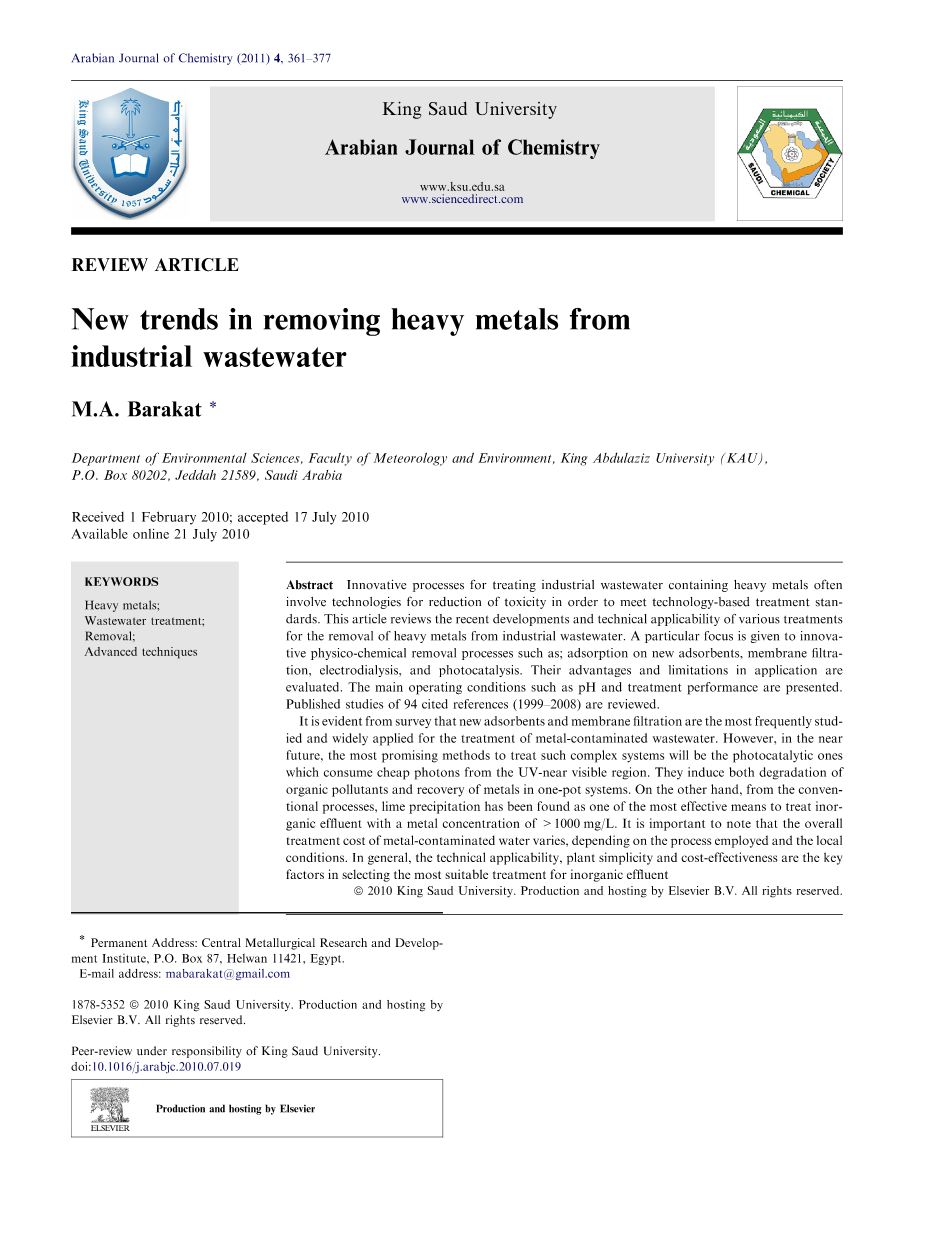
New trends in removing heavy metals from industrial wastewater
M.A. Barakat
Abstract:Innovative processes for treating industrial wastewater containing heavy metals often
involve technologies for reduction of toxicity in order to meet technology-based treatment standards. This article reviews the recent developments and technical applicability of various treatments for the removal of heavy metals from industrial wastewater. A particular focus is given to innovative physico-chemical removal processes such as; adsorption on new adsorbents, membrane filtration, electrodialysis, and photocatalysis. Their advantages and limitations in application are evaluated. The main operating conditions such as pH and treatment performance are presented. Published studies of 94 cited references (1999-2008) are reviewed. It is evident from survey that new adsorbents and membrane filtration are the most frequently studied and widely applied for the treatment of metal-contaminated wastewater. However, in the near future, the most promising methods to treat such complex systems will be the photocatalytic ones which consume cheap photons from the UV-near visible region. They induce both degradation of organic pollutants and recovery of metals in one-pot systems. On the other hand, from the conventional processes, lime precipitation has been found as one of the most effective means to treat inorganic effluent with a metal concentration of gt;1000 mg/L. It is important to note that the overall treatment cost of metal-contaminated water varies, depending on the process employed and the local conditions. In general, the technical applicability, plant simplicity and cost-effectiveness are the key factors in selecting the most suitable treatment for inorganic effluent.
Keywords: Heavy metals; Wastewater treatment; Removal; Advanced techniques
1 前言
在化学密集型的产业中,由于含金属离子废水的大规模排放,一些产生重金属物质(如Cd、Cr、Cu、Ni、As、Pb、Zn)的工业对环境造成严重的威胁。因为废水的高溶解性,一旦废水直接被排放到水生环境中,重金属就会被生物体吸收。从而进入食物链,一定浓度的重金属就会在人体内积聚。如果金属摄入超过一定浓度限值,就会带来严重的健康问题(Babeland Kurniawan,2004)。因此,对含重金属离子的废水的处理是刻不容缓的。如今生产过程中一些常规处理方法用于除去重金属,例如化学沉淀法、离子交换法和电化学法。但这些方法也存在各自的缺点,比如,去除金属不彻底,耗能大和产生有毒有害的污泥(Eccles,1999)。
近年来,研究者研究开发了许多更便宜且有效的技术方法,既大大减少二次污染,又能有效地回收利用废水中的金属。首先来说,吸附已经成为一大热门的处理技术之一,在此基础上也研究了多种多样的具有较大吸附容量的低成本吸附剂(Leung,2000)。吸附剂来源有矿物、有机物或生物质材料、沸石、工业产品、农业废弃物和聚合物材料等(Kurniawan,2005)。其次,膜分离技术由于其操作方便的特性被广泛地应用。膜过滤技术有超滤(UF)、纳滤(NF)和反渗透(RO) (Kurniawan,2006)。还有,电化学处理技术也有助于污水的处理过程,如电渗析(Pedersen,2003)。研究表明,光催化过程也是一种能够有效除去水中污染物并且应用前景广阔的技术(Skubal,2002)。尽管处理技术多样化,但理想的处理方法不仅需要考虑当地的地质条件,也要能够满足建立的最大污染物水平(MCL)标准。本文讨论了几种有现实意义的物理化学处理方法来处理工业废水中的重金属。并评估了它们在应用过程中的优点和局限性。为使它们的处理效率达到最优,还提出了最适合的操作条件,如pH和处理时间等。
2 工业废水中重金属
2.1 定义与危害
重金属被定义为密度大于5 g/cm3的金属。这包含了一大类元素,表1中列出了与环境研究相关的元素。砷通常被认为是危险的重金属,即使它实际上是半金属。重金属会对健康造成严重影响,比如生长发育减退,癌症,器官损伤,神经系统损害,甚至导致死亡。长时间暴露在一些金属(如汞和铅)浓度较高的环境中,可能会对自身免疫的发展不利,其中一个常见的案例就是人的免疫系统攻击自身的细胞。再次,还可能带来关节类疾病,例如类风湿性关节炎,肾脏疾病、循环系统、神经系统方面的疾病以及损伤胎儿大脑。特别是在较高浓度时,重金属会导致不可逆转的脑损伤。儿童对从食物中的金属剂量比成人要高,这是因为需要消耗更多的食物来维持或增加体重。为减少危险化学品对人类健康和环境的危害露,需要建立了废水排放法规。这包括对排放的废水中可能存在的重金属的类型和浓度的限制。
|
重金属 |
危害 |
MCL (mg/L) |
|
砷 |
皮肤病、脏肿瘤、血管病变 |
0.050 |
|
镉 |
肾衰竭、肾功能紊乱 |
0.01 |
|
铬 |
头痛、腹泻、恶心、呕吐、致癌 |
0.05 |
|
铜 |
肝损害、失眠 |
0.25 |
|
镍 |
皮炎、恶心、慢性哮喘、咳嗽、致癌 |
0.20 |
|
锌 |
抑郁、嗜睡、神经系统症状、口渴增加 |
0.80 |
|
铅 |
损害胎儿大脑、肾脏疾病、循环系统和神经系统 |
0.006 |
|
水银 |
类风湿性关节炎、肾脏疾病、循环系统和神经系统 |
0.00003 |
表1 重金属的MCL标准(最大浓度)
2.2 工业废水的来源
含有重金属的废水来源于不同的行业。电镀行业和金属表面加工工艺排放的废水都会含有大量的重金属物质(如镉、锌、铅、铬、镍、铜、钒、铂、银和钛)。其来源过程包括电镀、无电沉积、涂层转化、阳极氧化-清洗、研磨和蚀刻等。另一个产生重金属废料的制造业是印刷电路板行业,其废水包含大量的锡、铅和镍。重金属废物的其他来源还有:①木材加工业过程中,使用铬酸铜-砷酸盐对木材的处理会产生含砷废物;②制造无机颜料生产的含有铬化合物和镉的硫化物;③石油精炼厂的转化催化剂会产生含有镍,钒和铬的废弃物;④摄影机生产产业产生的具有高浓度银和亚铁氰化物的薄膜。这些工业生产的残渣和污泥都被归类危险废物。
2.3 传统的处理方法
从废水中除去重金属的传统的方法有很多,例如化学沉淀、浮选、吸附、离子交换和电化学沉积。化学沉淀是最广泛地被用于从无机废水中去除重金属的方法。通过化学沉淀去除重金属的概念机制为:
其中M2 和OH-分别代表溶解的金属离子和沉淀剂,M(OH)2是
剩余内容已隐藏,支付完成后下载完整资料
资料编号:[19029],资料为PDF文档或Word文档,PDF文档可免费转换为Word
您可能感兴趣的文章
- 饮用水微生物群:一个全面的时空研究,以监测巴黎供水系统的水质外文翻译资料
- 步进电机控制和摩擦模型对复杂机械系统精确定位的影响外文翻译资料
- 具有温湿度控制的开式阴极PEM燃料电池性能的提升外文翻译资料
- 警报定时系统对驾驶员行为的影响:调查驾驶员信任的差异以及根据警报定时对警报的响应外文翻译资料
- 门禁系统的零知识认证解决方案外文翻译资料
- 车辆废气及室外环境中悬浮微粒中有机磷的含量—-个案研究外文翻译资料
- ZigBee协议对城市风力涡轮机的无线监控: 支持应用软件和传感器模块外文翻译资料
- ZigBee系统在医疗保健中提供位置信息和传感器数据传输的方案外文翻译资料
- 基于PLC的模糊控制器在污水处理系统中的应用外文翻译资料
- 光伏并联最大功率点跟踪系统独立应用程序外文翻译资料